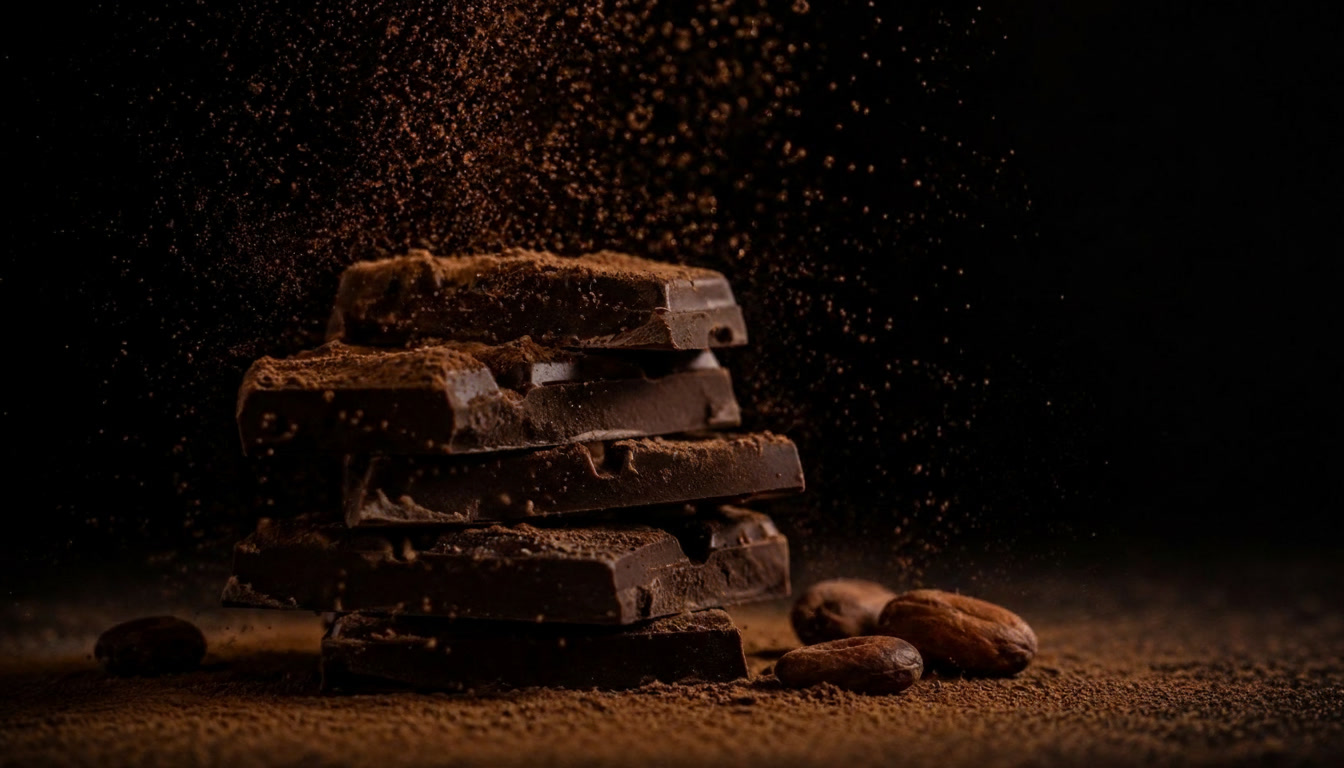
What do sunflowers and cocoa have in common? At first glance, almost nothing. However, it was in Alekseevka where the history of these two crops unexpectedly crossed paths. Almost 200 years ago, sunflower oil was produced here for the very first time in the world. Today, on this same Belgorod Region land, EFKO is mastering cocoa bean processing – a technology that was implemented by Russian confectioners in the 1900s but was later halted in favor of importing cocoa products.


The company has been working toward this for more than just one year. Over more than 20 years, EFKO Group has accumulated extensive expertise in producing food ingredients and working with various raw materials – from common sunflowers to exotic crops. Gradually, the company’s products became more complex, including margarines, filling fats, as well as cocoa butter substitutes/replacers and equivalents. Step by step, EFKO Group mastered technologies that seemed unattainable just yesterday. In the early 2000s, the company became one of the first in Russia to process oil palm, and in 2019 the processing of shea nuts was launched.


Working with shea not only resulted in a new product unique to Russian manufacturers, but also provided valuable experience and insight into the West African market, including logistics, purchasing, and the specifics of exotic raw materials. It was there that another crop essential to the confectionery industry caught the company’s attention: cocoa.


Thus began a new technological path for EFKO: studying cocoa beans, selecting raw materials of the right quality and taste, and setting up supply options. And then a pilot processing line was launched in Alekseevka. Today, selected cocoa beans from Africa undergo all the main stages of preparation here—from cleaning to roasting – and turn into Russian-made cocoa products.


“Cocoa is a relatively demanding product that is not easy to work with. Its quality and flavour depend heavily on the weather, the growing region, and how the beans are dried and stored. That is why a separate pillar of our work involved setting up a high-quality raw material procurement system – selecting fruits of the precise quality and flavour profile needed to create premium cocoa products on a par with the world's leading manufacturers,” explains Anna Lebedenko, Director of Cocoa Products, Oil & Fat Division, EFKO Group. “Currently, the project operates as an in-house R&D unit developing new flavours and turnkey solutions – both to meet the company's internal needs and for end consumers. However, the very ability to supply our own production facilities with our own cocoa products is a technological triumph and a new step toward strengthening food security.”


This is just the beginning. But this is exactly how products with their own history are born. Perhaps chocolate from Alekseevka will soon be recognized in the same way as gingerbread from Tula and honey from Altai are recognized today.

Previous
Next

In the Alekseevskaya Sloboda of the Belgorod province, where in the late 1820s, sunflower oil was produced for the first time in the Russian Empire, and the first oil mill in Russia was built.

During the years of the First World War, and then the Civil War, production was completely stopped. The restoration of the plant began only in 1923. The main focus of its work remained the processing of coriander and anise. In 1936, the second oil extraction plant in all of Russia was built in Alekseevka. Later, both enterprises were merged into one of the largest essential oil extraction complexes in the Soviet Union.

During the Great Patriotic War, the complex was almost destroyed. Restoration work, which began in 1943, continued until the end of 1948. In the post-war period, comprehensive reconstruction was carried out on many sections using the latest technological advancements. By the 1970s, the Alekseevsky essential oil extraction complex produced up to 80% of the world's coriander oil. For its achievements in production development, the development and implementation of advanced technology, by decree of August 14, 1972, the Supreme Soviet of the USSR awarded the plant the Order of the Badge of Honor.

Unfortunately, in the 1990s, the enterprise that brought fame and wealth to the people of Alekseevka fell into decline and practically collapsed. The revival of the enterprise began in 1994 with the arrival of a new team and the creation of the EFCO Group.

The enterprise underwent large-scale modernization of production and established a new management system. The company decided to return to its roots and resume the production of sunflower oil. Later, EFCO expanded the range and volume of products.

In 2002, a new business direction was opened, and the most modern plant for the production of specialized fats and margarines for the food industry, EFCO Food Ingredients, was launched in the city of Alekseevka, Belgorod region. A scientific and production laboratory was established at the plant, equipped to control product quality at all stages of production and conduct in-depth scientific research.

In 2002–2003, EFCO technologists mastered the most environmentally friendly process of vegetable oil processing – the 'dry' fractionation method, applied the technology of physical refining of oils and fats, and managed to create Russia's first cocoa butter substitute 'Ecolad,', milk fat substitute 'Ecolact,', solid confectionery fat 'Ekond,', soft confectionery fat 'Ekonfe,', universal margarines 'Ecouniversal,', frying shortenings 'Ecofri,', and the first domestic fats with minimal trans-isomers content – confectionery fats 'Econat.'

In 2005, the R&D center of the fats and oils division was created based on EFCO Food Ingredients, consisting of the Applied Research Center and the Pilot Plant Department. The center’s specialists are engaged in developing and testing fat products for healthy eating lines and innovative recipes, taking into account the needs of manufacturers.

In 2006, the company was the first in Russia to successfully pass an audit for compliance with the quality and safety requirements of the BRC (Global Standard for Food Safety) and the International Food Standard (IFS).

In 2008, the second plant for the production of specialized fats and margarines was launched in the port of Taman in the Krasnodar Territory, and the only deep-water sea terminal for food cargo in Russia was built.

The following year, the plant successfully passed certification for compliance with the quality and safety requirements of the British Retail Consortium (BRC) and the International Food Standard (IFS). International auditors awarded the company the highest compliance level – Grade AA.

In 2014, the company’s technologists created the first domestic equivalent of cocoa butter.

In 2015, the EFCO Group launched a project to create a unique fats and oils cluster in the Republic of Kazakhstan. Thanks to production modernization and the transfer of global technologies, the production of specialized fats and margarines meeting the highest international standards was established in a short time.

In 2016, EFCO opened its fourth site for the production of specialized fats and margarines at the Evdakovsky fats and oils plant in the Voronezh region.

In 2021, production capacity at the Taman port facility was increased – launching the world's first 'million-ton plant' for the production of specialized fats and margarines.

In 2023, the company launched the only shea nut processing plant in Russia.

Thanks to R&D and significant investments by domestic producers in developing their own infrastructure, primarily by EFCO, the share of imported producers in the Russian food ingredients market has decreased from 49% to 9% over the past 15 years and continues to decline.

Almost 200 years later, Alekseevka remains the largest center for vegetable oil processing in the country.