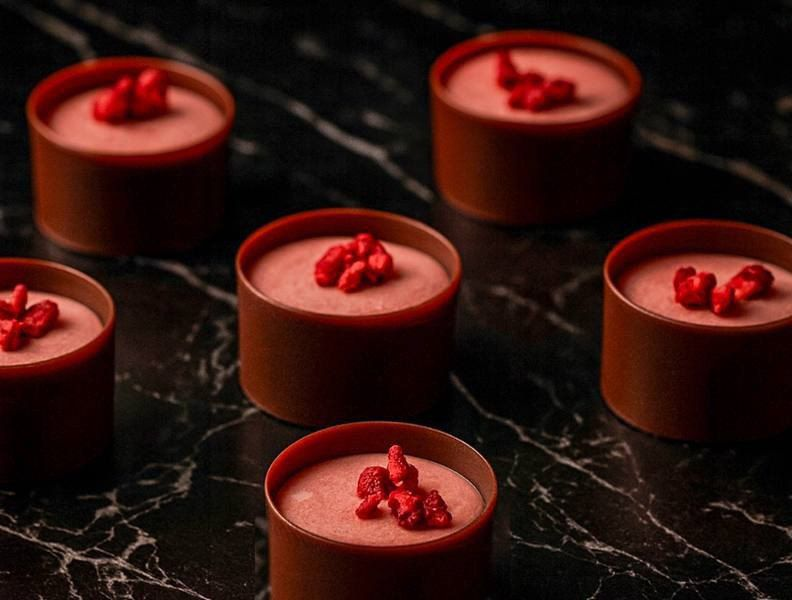
A creamy and chocolate dessert with a slight tang and rich sweetness, served in a waffle cup with chocolate coating. The conference of the Ice Cream Makers' Union of Russia was held in Moscow, where technologists from the EFKO Group presented participants with a comprehensive range of solutions for its production.


Ancient ice cream recipes began with snow and honey. Modern ones start with science, engineering, and bold ideas — and it is precisely this evolution that has made ice cream a truly beloved treat. Today, behind every perfect texture, stable structure, and rich flavour are dozens of scientific developments, advanced equipment solutions, and carefully selected ingredients. This delicate balance was the focus of the main industry event of the year: the conference of the Ice Cream Makers' Union in Moscow, where ingredient and equipment manufacturers, scientists, and industry experts gathered under one roof.


For companies working with ice cream, the market is changing rapidly: demand is growing for sugar-free products, functional ingredients, and more cost-effective solutions.


The technology team from the Oil and Fat Division shared with participants how to achieve the perfect texture, make ice cream sweet without sugar, and properly select the right coating for ice cream bars.


Ivan Nikulin

 Technologist, EFKO Group

"Every ingredient plays a role. Ecolact milk fat replacers provide a creamy taste, while Ecoice milk fat replacers improve whipping ability. Stabilizers help achieve a smooth creamy structure by preventing the formation of large ice crystals, retaining foam, and maintaining product shape under temperature fluctuations".


Coatings are especially important for the ice cream bar segment. Our product line includes dark options with a rich cocoa flavour that crystallize quickly, are economical to use, and ensure even coverage.


And the sweet protein brazzein opens the way to sugar-free ice cream with a familiar taste. In 2024, the world's first clinical study of brazzein was completed. It showed that the protein is safe for use in food and beneficial for the body with long-term consumption. It does not raise blood sugar levels and does not contribute to fat accumulation. In an era when consumers are seeking a balance between pleasure and health, such solutions become true growth drivers.


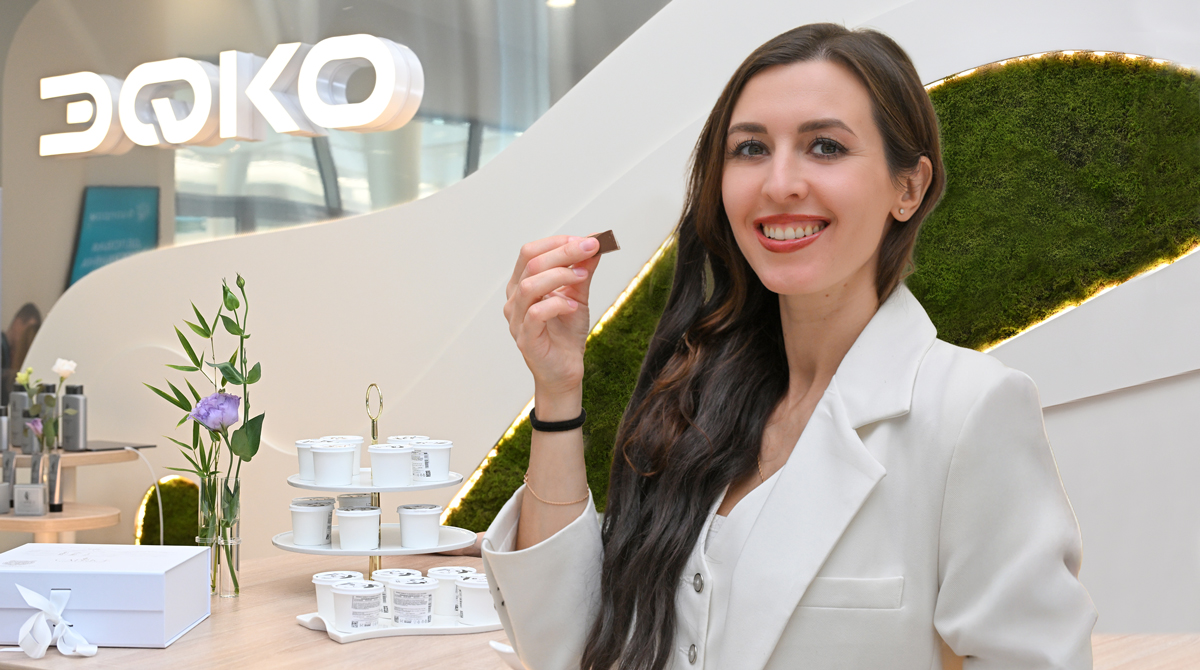
During the tasting, participants tried classic ice cream with milk fat replacer and stabilizer, as well as a sugar-free version with brazzein. Both products received high praise: the classic for its stable texture, and the sugar-free ice cream for its well-balanced taste.


Alexander Alekseenko 

Director of Dairy Department, Oil and Fat Division, EFKO Group    

"EFKO Group has been operating in the ice cream market since 2003, and during this time we have come a long way in creating ingredients for this product. When we first started selecting fats for ice cream, we understood that this is a product with special requirements: it needs structural stability during deep freezing and the right melting profile that provides that 'creamy' sensation. Considering these features, as well as the seasonality of the market — the short warm period when factories operate at maximum capacity — finding the ideal product was not easy. Today, we offer a full range of solutions — from the rich 'creamy' Ecolact milk fat replacer to the classic neutral combination with lauric fats based on Ecoic".

Previous
Next

In the Alekseevskaya Sloboda of the Belgorod province, where in the late 1820s, sunflower oil was produced for the first time in the Russian Empire, and the first oil mill in Russia was built.

During the years of the First World War, and then the Civil War, production was completely stopped. The restoration of the plant began only in 1923. The main focus of its work remained the processing of coriander and anise. In 1936, the second oil extraction plant in all of Russia was built in Alekseevka. Later, both enterprises were merged into one of the largest essential oil extraction complexes in the Soviet Union.

During the Great Patriotic War, the complex was almost destroyed. Restoration work, which began in 1943, continued until the end of 1948. In the post-war period, comprehensive reconstruction was carried out on many sections using the latest technological advancements. By the 1970s, the Alekseevsky essential oil extraction complex produced up to 80% of the world's coriander oil. For its achievements in production development, the development and implementation of advanced technology, by decree of August 14, 1972, the Supreme Soviet of the USSR awarded the plant the Order of the Badge of Honor.

Unfortunately, in the 1990s, the enterprise that brought fame and wealth to the people of Alekseevka fell into decline and practically collapsed. The revival of the enterprise began in 1994 with the arrival of a new team and the creation of the EFCO Group.

The enterprise underwent large-scale modernization of production and established a new management system. The company decided to return to its roots and resume the production of sunflower oil. Later, EFCO expanded the range and volume of products.

In 2002, a new business direction was opened, and the most modern plant for the production of specialized fats and margarines for the food industry, EFCO Food Ingredients, was launched in the city of Alekseevka, Belgorod region. A scientific and production laboratory was established at the plant, equipped to control product quality at all stages of production and conduct in-depth scientific research.

In 2002–2003, EFCO technologists mastered the most environmentally friendly process of vegetable oil processing – the 'dry' fractionation method, applied the technology of physical refining of oils and fats, and managed to create Russia's first cocoa butter substitute 'Ecolad,', milk fat substitute 'Ecolact,', solid confectionery fat 'Ekond,', soft confectionery fat 'Ekonfe,', universal margarines 'Ecouniversal,', frying shortenings 'Ecofri,', and the first domestic fats with minimal trans-isomers content – confectionery fats 'Econat.'

In 2005, the R&D center of the fats and oils division was created based on EFCO Food Ingredients, consisting of the Applied Research Center and the Pilot Plant Department. The center’s specialists are engaged in developing and testing fat products for healthy eating lines and innovative recipes, taking into account the needs of manufacturers.

In 2006, the company was the first in Russia to successfully pass an audit for compliance with the quality and safety requirements of the BRC (Global Standard for Food Safety) and the International Food Standard (IFS).

In 2008, the second plant for the production of specialized fats and margarines was launched in the port of Taman in the Krasnodar Territory, and the only deep-water sea terminal for food cargo in Russia was built.

The following year, the plant successfully passed certification for compliance with the quality and safety requirements of the British Retail Consortium (BRC) and the International Food Standard (IFS). International auditors awarded the company the highest compliance level – Grade AA.

In 2014, the company’s technologists created the first domestic equivalent of cocoa butter.

In 2015, the EFCO Group launched a project to create a unique fats and oils cluster in the Republic of Kazakhstan. Thanks to production modernization and the transfer of global technologies, the production of specialized fats and margarines meeting the highest international standards was established in a short time.

In 2016, EFCO opened its fourth site for the production of specialized fats and margarines at the Evdakovsky fats and oils plant in the Voronezh region.

In 2021, production capacity at the Taman port facility was increased – launching the world's first 'million-ton plant' for the production of specialized fats and margarines.

In 2023, the company launched the only shea nut processing plant in Russia.

Thanks to R&D and significant investments by domestic producers in developing their own infrastructure, primarily by EFCO, the share of imported producers in the Russian food ingredients market has decreased from 49% to 9% over the past 15 years and continues to decline.

Almost 200 years later, Alekseevka remains the largest center for vegetable oil processing in the country.