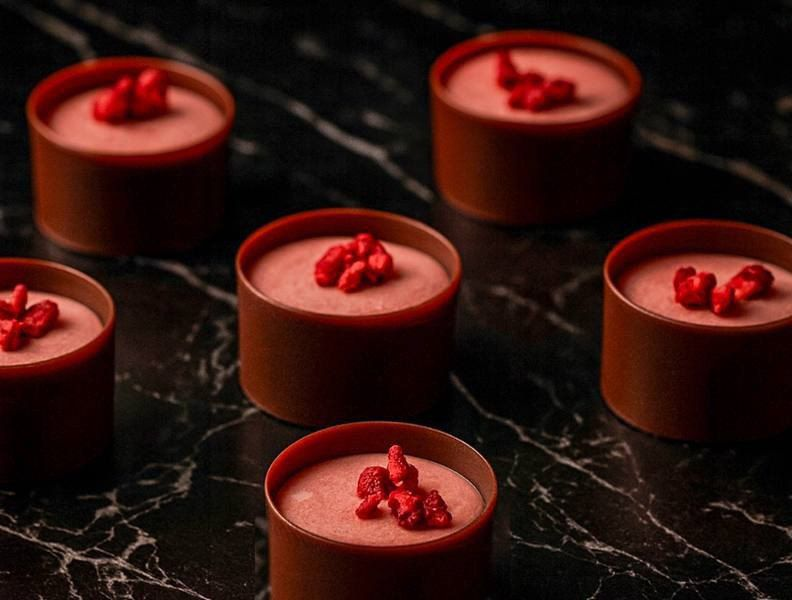

Chocolate and chocolate-based sweets traditionally remained consumer favorites this year. According to forecasts, their popularity will continue. Various ingredient lines are used in the production of such desserts. At the final December seminar, technologists from EFKO's Oil and Fat Division explained how these components are created.


Chocolate, molded figures, candies, wafers — many of them contain equivalents, improvers, or substitutes for cocoa butter. They help achieve the desired texture, gloss, and snap of the products.


Natalia Khabarova

Technologist, EFKO Group

"Cocoa butter equivalents make it possible to achieve perfect coating recipes — with a pronounced flavour of the raw ingredients — and also expand the product range by enabling their use in a wide variety of items, from soft milk coatings to snappy dark ones. Cocoa butter improvers are designed for partial replacement of cocoa butter by up to 5%, ensuring product stability during storage and transportation, including during the summer period and in regions with hot climates. Cocoa butter substitutes are excellent for creating coatings — snappy, firm, with excellent gloss and flavour characteristics — and represent a particularly rational and cost-effective solution". 


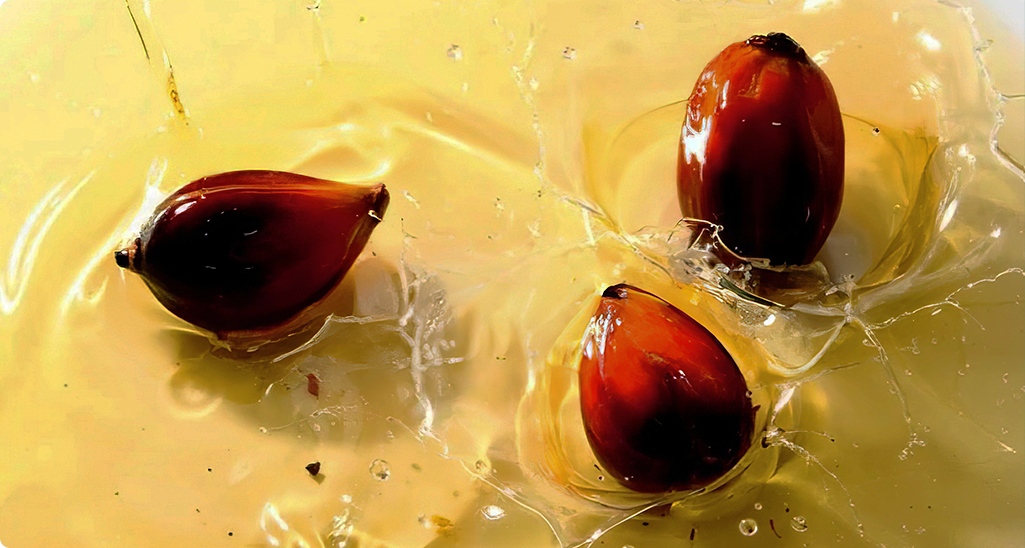
The quality of such ingredients largely depends on the raw materials. Specialty fats are produced from both domestic and tropical oils, most often palm oil. Its unique semi-solid consistency makes it indispensable in the confectionery industry, as it allows for the production of a full range of fats without trans-isomers of fatty acids.


Nuria Dianova 

Nutritionist, Executive Director of the National Research Center "Healthy Nutrition"

"Modern medicine considers palm oil a safe vegetable product. Despite the myths, people have been using it in nutrition for over five thousand years — even longer than chocolate". 


EFKO Group technologists helped clarify how specialty fats based on various oils and fats affect the structure, consistency, flavour, and quality of confectionery products, while ensuring the full diversity of assortment on the shelf.


For pastes and soft fillings, we offer Econat confectionery fats — through the use of a unique product, exotic shea butter, a delicate creamy texture is achieved, as well as excellent release of the flavour and aroma of all raw ingredients. For the production of wafer fillings, we recommend fats from the Econfe line, which possess the necessary properties for creating an airy consistency and also provide excellent bonding of wafer sheets. For popular praline-type candies, the ideal solution is Econd confectionery fats with high crystallization speed and heat resistance. Thanks to their unique composition and production characteristics, Ecomix confectionery fats have barrier properties, which is especially relevant in products with a high content of nut raw materials.


The seminar also discussed changes in standards. One of the key developments is the creation of an interstate standard for mixed-type cocoa butter substitutes. The GOST R — a national standard for this category — has been in effect since the end of 2023.


Tatyana Savenkova

Doctor of Technical Sciences, Professor, President of the Union of Food Ingredients Producers, Director of the Research Institute of Quality, Safety and Technologies at Plekhanov Russian University of Economics

"Responsible manufacturers are already using such solutions. They make it possible to produce products with a minimal level of trans-isomers — less than 2%. Those who are not yet familiar with the new requirements should pay attention to them". 


The chocolate market is also changing in terms of taste preferences: more and more products are being produced "without sugar".


Lyubov Baranova

Founder of LABO MARKETING Agency


"83% of consumers are trying to reduce their sugar intake. In 2024, the sugar-free confectionery market reached $2.43 billion. Chocolate leads the way — accounting for 42% of the market. By 2035, growth to $4.25 billion is expected". 


One of the most promising areas is sweet protein. It opens up possibilities for creating a new generation of confectionery products. Currently, sweet protein from EFKO is being tested at leading factories in Russia.


Alena Surkova 

Director for the Confectionery Industry, Oil and Fat Division, EFKO Group

"2025 was a challenging year for the entire industry. Manufacturers need to simultaneously maintain quality and optimize production costs. To remain competitive, it's essential not only to respond to changes but also to stay ahead of them. We are pleased that our solutions help partners meet GOST standards and consumer expectations". 


Previous
Next

In the Alekseevskaya Sloboda of the Belgorod province, where in the late 1820s, sunflower oil was produced for the first time in the Russian Empire, and the first oil mill in Russia was built.

During the years of the First World War, and then the Civil War, production was completely stopped. The restoration of the plant began only in 1923. The main focus of its work remained the processing of coriander and anise. In 1936, the second oil extraction plant in all of Russia was built in Alekseevka. Later, both enterprises were merged into one of the largest essential oil extraction complexes in the Soviet Union.

During the Great Patriotic War, the complex was almost destroyed. Restoration work, which began in 1943, continued until the end of 1948. In the post-war period, comprehensive reconstruction was carried out on many sections using the latest technological advancements. By the 1970s, the Alekseevsky essential oil extraction complex produced up to 80% of the world's coriander oil. For its achievements in production development, the development and implementation of advanced technology, by decree of August 14, 1972, the Supreme Soviet of the USSR awarded the plant the Order of the Badge of Honor.

Unfortunately, in the 1990s, the enterprise that brought fame and wealth to the people of Alekseevka fell into decline and practically collapsed. The revival of the enterprise began in 1994 with the arrival of a new team and the creation of the EFCO Group.

The enterprise underwent large-scale modernization of production and established a new management system. The company decided to return to its roots and resume the production of sunflower oil. Later, EFCO expanded the range and volume of products.

In 2002, a new business direction was opened, and the most modern plant for the production of specialized fats and margarines for the food industry, EFCO Food Ingredients, was launched in the city of Alekseevka, Belgorod region. A scientific and production laboratory was established at the plant, equipped to control product quality at all stages of production and conduct in-depth scientific research.

In 2002–2003, EFCO technologists mastered the most environmentally friendly process of vegetable oil processing – the 'dry' fractionation method, applied the technology of physical refining of oils and fats, and managed to create Russia's first cocoa butter substitute 'Ecolad,', milk fat substitute 'Ecolact,', solid confectionery fat 'Ekond,', soft confectionery fat 'Ekonfe,', universal margarines 'Ecouniversal,', frying shortenings 'Ecofri,', and the first domestic fats with minimal trans-isomers content – confectionery fats 'Econat.'

In 2005, the R&D center of the fats and oils division was created based on EFCO Food Ingredients, consisting of the Applied Research Center and the Pilot Plant Department. The center’s specialists are engaged in developing and testing fat products for healthy eating lines and innovative recipes, taking into account the needs of manufacturers.

In 2006, the company was the first in Russia to successfully pass an audit for compliance with the quality and safety requirements of the BRC (Global Standard for Food Safety) and the International Food Standard (IFS).

In 2008, the second plant for the production of specialized fats and margarines was launched in the port of Taman in the Krasnodar Territory, and the only deep-water sea terminal for food cargo in Russia was built.

The following year, the plant successfully passed certification for compliance with the quality and safety requirements of the British Retail Consortium (BRC) and the International Food Standard (IFS). International auditors awarded the company the highest compliance level – Grade AA.

In 2014, the company’s technologists created the first domestic equivalent of cocoa butter.

In 2015, the EFCO Group launched a project to create a unique fats and oils cluster in the Republic of Kazakhstan. Thanks to production modernization and the transfer of global technologies, the production of specialized fats and margarines meeting the highest international standards was established in a short time.

In 2016, EFCO opened its fourth site for the production of specialized fats and margarines at the Evdakovsky fats and oils plant in the Voronezh region.

In 2021, production capacity at the Taman port facility was increased – launching the world's first 'million-ton plant' for the production of specialized fats and margarines.

In 2023, the company launched the only shea nut processing plant in Russia.

Thanks to R&D and significant investments by domestic producers in developing their own infrastructure, primarily by EFCO, the share of imported producers in the Russian food ingredients market has decreased from 49% to 9% over the past 15 years and continues to decline.

Almost 200 years later, Alekseevka remains the largest center for vegetable oil processing in the country.